Thursday, April 17, 2014

Holy Week and Seafood Diet!

Ahhh. Holy week. The long vacation. It is meant to be focused on Christ and how God sacrificed for us. But for most, aside from the spiritual purpose of it, it is a time when most of us has time to take a vacation, if not out-of-town, wherever one can find relaxation.

I started the holiday by getting some "macopa" or mountain apple (according to Google). My co-worker has a tree in front of their house and it bears fruit all year round. The fruit is different from the usual fruits we see in the market. The fruits are small, just a little bigger than my thumb, deep red in color and very succulent. It is not that sweet but when sprinkled with a little salt, it is very delicious! When we went to their, the tree's branches looked bent and tired because of the number of fruits in the tree. We started to pick fruits immediately using only our hands since the tree is not that tall. I was able to gather around 5 kilos of the fruit.
The humbled tree

Looking at the fruits


The abundance.

The next day, we headed to my husband's parents' house in Malabon. We tried to adhere to the no meat policy during Holy week so the first thing that I cooked was seafood pesto. I bought shrimps, squid and mussel and of course, fresh oysters!!!
Shrimps, squid and mussels.

Cleaned and ready to cook!


After brushing the oysters to remove grime and dirt, I boiled a pot of water and put 4 or 5 pieces of oyster and take them out after just 2 mins. The oysters will not be overcook and the taste of the sea is still there. I was not able to take pictures of the cooked oysters because they were eaten so fast before I knew it (my mind went blank from sheer joy over eating the oysters).

For the seafood pesto, I made pesto sauce with fresh basil, olive oil, garlic and cashew nuts (substitute for the original pine nuts, although you can use walnut also). I used a blender since I do not have a food processor. I cooked it to removed liquids other than the olive oil. I cooked the seafoods in very high heat to cooked the meat slightly and remove excess liquid but will not overcook the meat. I mixed it with cooked pasta and voila! Served while hot!


The Holy week can be spent in whatever way we want. Hope everyone enjoys their week!

Saturday, March 22, 2014

Fish and Tofu with Tausi

Cream Dory fish fillet is always available in the supermarket with prices as low as P110. I always keep a pack in the freezer so whenever the craving for fish fillet comes up, it's ready in the freezer. I used to prepare breaded fillet and put packs of it in the freezer. But there came a time when we got tired of it. So I just stick with the unprepared pack.

We love tofu. Fried, steamed, in soup, whatever! So today I thought of cooking the fish and tofu with tausi because it was a long time since I last cooked it.

This dish is very savory and even my son loves it. Pair it with hot steamed rice and you have got a meal fit for a king!

Ingredients:

1 pack Cream Dory fish fillet
10 small blocks of tofu or 2 big blocks
1 can or pack of tausi (fermented black or yellow beans, whichever you prefer)
a bunch of kinchay, washed and cut into 1"
1 big onion, minced
4 cloves garlic, minced
1/4 cup soy sauce
2 Tbsp cornstarch dispersed in water
extra cornstarch for fish fillet
cooking oil for fying
sugar, salt and pepper to taste

Cut the cream dory fillet into bite-size pieces and dredge in cornstarch. Cut the tofu into at least 1"x2"x1/2" pieces. A small tofu can be cut into 4 pieces.

Heat at least 2 cups oil in deep pan. Test temperature by dropping a small clump of cornstarch from the fish. If the clump floats immediately, the oil is ready. Fry the tofu until golden brown. Fry the fish until the coating is a little bit crunchy but do not cook fish thoroughly.


I bought whatever is available in the market but if you can get the Temple brand...
Heat oil in a separate pot or deep pan. Saute garlic and onion. Put tausi and saute. Put about 3 cups of water and soy sauce. Let it boil. Put the cornstarch while stirring to dispersed cornstarch. If the sauce is not thick enough put more cornstarch. Put sugar, about 2 tsp to even out the saltiness and to give the illusion of MSG.


Put the fried fish and tofu in the sauce and simmer for 10 mins to infuse the sauce into the tofu and fish and also to cook the half-cooked fish. Put the kinchay. Turn off the fire. Serve hot with steamed rice!


Sunday, March 16, 2014

Spinach soup on a hot Sunday!

I can feel the summer heat already. Nights are becoming warmer and harder to sleep without airconditioning. But this did not stop me from making a big pot of soup. My family loves meals accompanied with a hearty soup. Today, I made a very easy soup to make. Spinach soup.

Spinach has become common in the market nowadays. One can buy spinach only in supermarket only five years ago. I think vendors become aware of it already. And I think a lot of local farmers are also planting them. Spinach has little flavor but despite of this it is loaded with nutrients. And because it doesn't taste much, it is easier for kids to eats this. It can be cooked in lots of possible ways.

I first encountered spinach soup in one of the Cantonese restaurant we frequented. It was divine and judging from the texture, I believe that I can easily make some at home. I made my own version. With my choice of assorted meat in it.

Ingredients:
A bunch of spinach
100g ground pork, shelled shrimps, or chicken
1 block of silken tofu
6 pieces meatballs with mushrooms, cut into cubes (1 ball=8)
10 pieces of black fungus (tenga ng daga), softened and cut into strips.
2 bouillons (pork, chicken or shrimp)
3 Tbsp cornstarch or potato flour, dispersed in water
1 piece onion, minced
4 cloves of garlic
salt and pepper to taste

Heat 2 Tbsp oil in pot. Brown the ground meat. Saute onion and garlic. Then put 1 L of water.

Clean the spinach. Then puree in blender with 1 L water.

Put the pureed spinach in the pot. Bring to boil.


Put the tofu, fungus, meatballs into the pot. Let boil for 10 mins or until everything floats, it means the meatballs and tofu is cooked already. Put the cornstarch into the soup while stirring. If you are not satisfied with the thickness of the soup , you may add more cornstarch. Potato starch produces thicker soup and it does not break down like cornstarch.

Add pepper. If the saltiness is not enough, add salt.

Serve hot and add sesame oil, if desired.


Tuesday, March 11, 2014

Thai essentials...

Sour, salty, spicy, sweet and more! The experience your palate get when you eat Thai foods. Tom yum goong and sukhothai soup are my comfort foods added with a cup of Thai "halo-halo". I am so obsessed with Thai foods that I bought my own kaffir lime tree a couple of years ago.

Kaffir lime is the one of the most distinct flavors found in Thai foods. It is basically a kind of citrus fruit. Although it bares fruit they are rarely used. It is the leaves that is commonly added to the dishes.
My kaffir lime tree

The distinct "twin" leaves
 Since most of the members in my family are fond of spicy food, red chili pepper is a staple in our kitchen. I sometimes buy fresh chilis then let them dry under the sun to preserve them technically.


I almost forgot, there is also an ingredient usually found in Thai foods and its tamarind paste. I couldn't get tamarind paste so I opted for tamarind that goes by the bulk that is usually available in the market. It only costs P20 for a kilo.
 It is futile to take the seeds so I just put it in a pan with a little water and let it boil to extract the pulp. Then I just use sufficient amount and save the rest.
 It is also common to find cilantro leaves (coriander), which we call wansoy. A lot of people do not like the smell of it, I for one did not like it at first. It looks a lot like parsley or kinchay so be careful when you buy this.
Photo courtesy of Wikipedia
There is also an ingredient called shrimp paste. It must not be confused with bagoong. This shrimpaste is the dried extract of shrimps made into a cake. I found a similar item in Bicol but looks like Belacan, actually. I can't remember the name but I will update this blog as soon as I asked my friend from Bicol.

And of course the Fish sauce or patis as we fondly call it. I like the patis I usually get in Malabon but since I rarely go there, I just buy whatever available brand there is in the market. But be sure to buy the ones with the PATIS label on it because I saw some brands that say "PATIS FLAVOR", as I am sure its all artificial.


My next post will be a very simple Thai dish...Son-in-Law Eggs!


Thursday, February 20, 2014

Nang nangitlog ang alamang!

I have an aunt who sells her leche flan. She only use the yolk of the egg. So what happens with all the egg white...she gives them to us. I am not much of a baker because the cost of baking something is more expensive than just buying it from a bakeshop. Besides the fact that my trusted sidekick eats egg white only, I use it in a variety of dishes.

Yesterday morning, I thought of cooking fried rice in the morning. We love to eat fried rice mixed with all sorts of meat in it. It's like 2 in 1. Rice and viand in one dish. I went to my cupboard and inside my fridge. All I saw was a bag of dried "alamang".


I thought of bagoong rice added with the egg white. I cooked the egg white in a non-stick pan. And it looked like a round block of tofu when cooked.


I diced the egg white and then heated a tablespoon of oil in my pan. I toasted the dried alamang. Sauteed some minced garlic and put the cooked rice in it.


 The diced egg white resembles tofu. Actually, I also used this in soups as substitute to tofu.


This fried rice is very tasty and can be eaten on its own or....

Eat it with tapa!


Sunday, February 16, 2014

Spaghetti with Clams in Tomato Sauce

I went to the market on Saturday morning and found out that tomatoes are cheap nowadays costing about P15-P20. I immediately bought a kilo. I decided to make tomato sauce for pasta since I bought some clams the day before.


Clams


Removed from shell


I reduced the liquid from the clams. I reserved this to be combined in the sauce. It will make the sauce very tasty. Cook the pasta al dente while doing this.

Because I am too lazy to make the sauce the harder way, I opt to do a shortcut. I pureed the tomatoes, 2 onions and garlic in the blender. Sauce with clams tastes better with the distinct flavor of garlic in it.


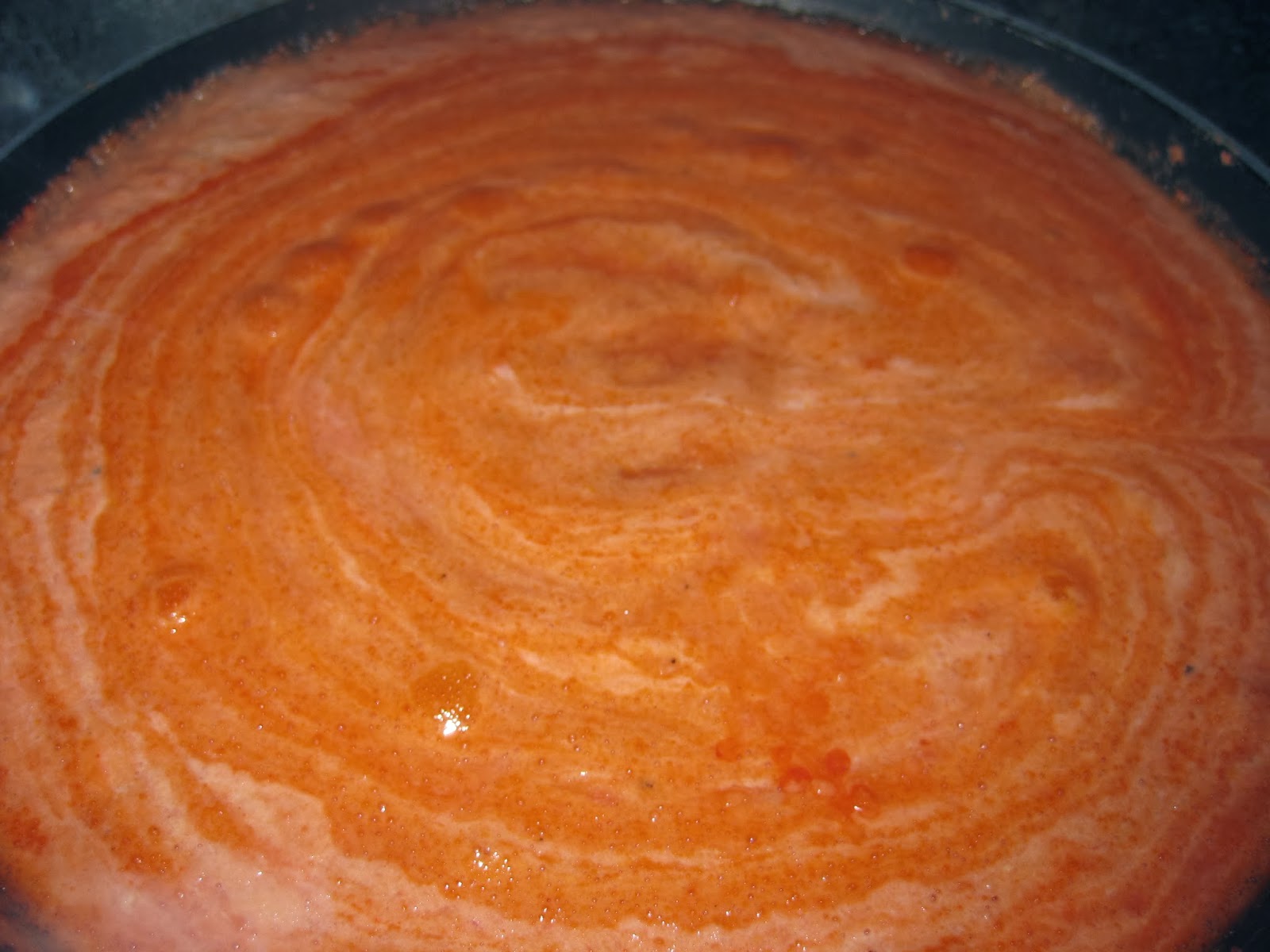
I sauteed some minced garlic in oil and then poured the pureed tomatoes in the pan. The puree will look too pale but as the sauce cooks and thickens, the color will turn bright. Put salt and pepper to taste. I put the pasta and voila! The spaghetti with clams in tomato sauce is made! You can put some clams in shell for added presentation. Top with basil or parmesan for added flavor!


 Bon apetit!

Friday, February 7, 2014

Spanish style bangus

I consider the pressure cooker as one of the best things to have in a kitchen. It can be used in a lot of things especially in shortening the cooking time of food and for canning. One of the things I use it for is cooking spanish-style sardines or bangus. I don't like the ones that can be bought ready-to-eat in the supermarket because I don't like the metallic taste of those available in tin cans.

It can be stored in mason jars or just put it in the fridge. Since I don't have mason jars yet, what I have are jars with plastic lids, definitely goes into the fridge.

Ingredients:
1 kl baby bangus, innards removed and fins cut and sliced into 2-3 cuts
2 pickles, sliced
1 medium carrot, sliced
3 bay leaves
1 tsp whole black pepper
3 cloves garlic, minced
1 sachet of NamNam tomato (added taste and color, substitute tomato sauce)
Chili pepper, if you want it a little spicy
1 Tbsp patis
1 tsp ground pepper
1 cup water
1 Tbsp vinegar
Cooking Oil (Olive, Corn, Canola or Peanut), whatever your preference is

Arrange the slices of fish in the pressure cooker. Put all the ingredients in. Put sufficient oil to nearly cover the fish. Do not mix. Cover the pot and cook in high heat until the pot whistles. Then lower the heat and cook for at least 1 hour. Turn off the heat and wait for the valve to go down indicating that the pot can be safely opened.

Serve hot or not over plain steamed or garlic fried rice. It can also be enjoy with toast and pan de sal!

I am going to purchase a couple of mason jars next time and practice on my canning skills!